
Emily Graham
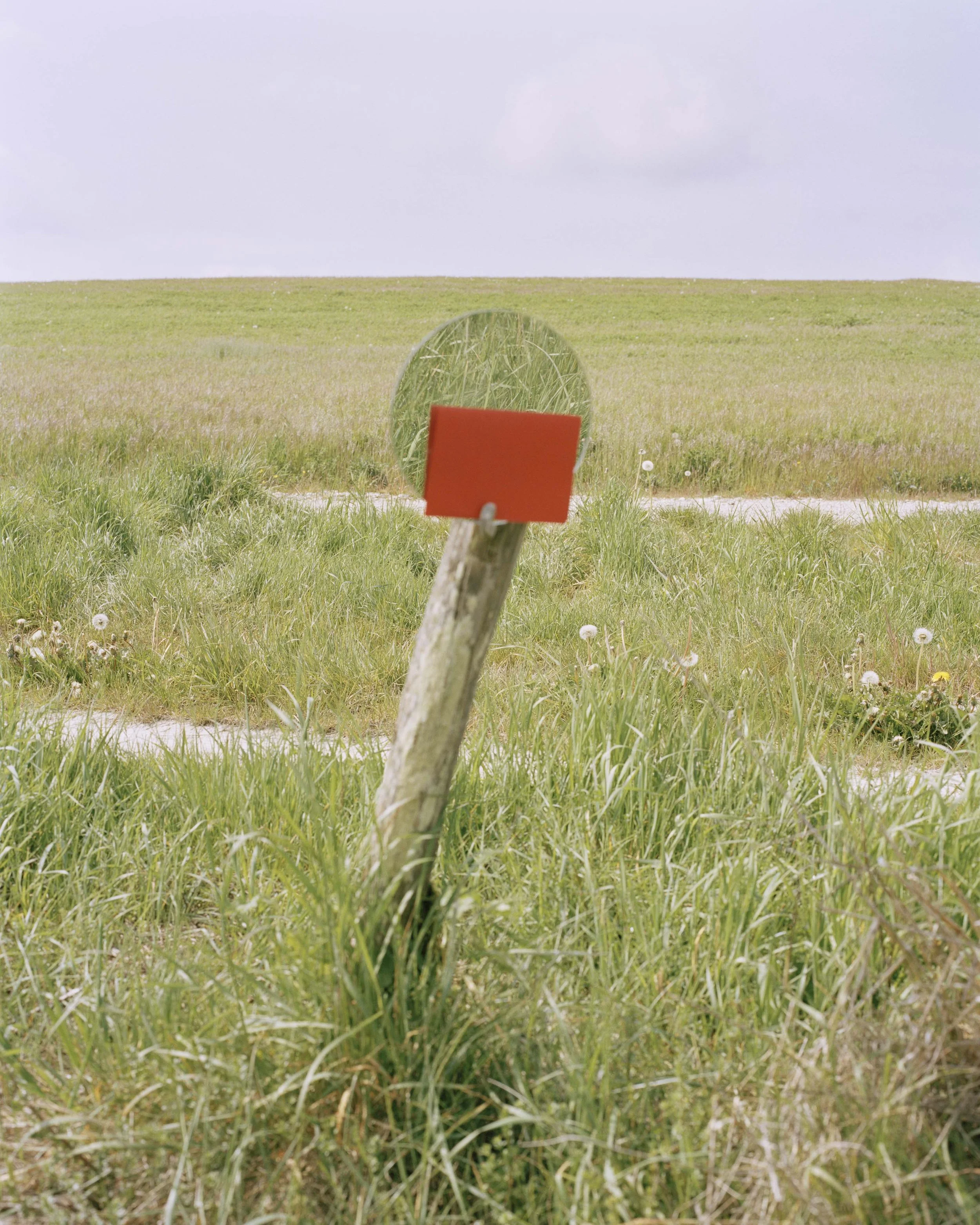
Emily Graham. From the series, The Palace.
The Palace
Emily Graham is an artist working primarily with colour photography. Her practice often deals with elusive subject matter; a search for the unknown, a psychological state, or the act of communication and interpretation. Using nuclear semiotics as a starting point, The Palace considers how and what we leave behind for future generations. Situated between representation and abstraction, the work explores our cultures of memorialisation, the quest for a universal visual language, and our future archaeologies: what we might communicate over the abyss of deep time.
Nuclear energy has become a symbol of our age, the double-edged sword of technological utopia and universal doom. All nuclear activity, such as power generation, weapons development, and decommissioning, produces radioactive waste, which is challenging to dispose of. Deep geological storage is currently thought to be the best long term solution - burying waste in deep subterranean repositories, specialised facilities designed to safely isolate radioactive waste from the environment for thousands, and potentially millions, of years.. The security of these sites must therefore last forever, ensuring that future generations do not accidentally, or through curiosity, disturb their contents.
Nuclear semiotics is an interdisciplinary field of research exploring the complexities of leaving long term nuclear waste warning messages for future generations, to deter human intrusion at nuclear waste repositories. Languages have a habit of disappearing, and signs and symbols can be interpreted in a multitude of ways. Communities, environments, and landscapes shift over thousands of years. Scientists, anthropologists, archaeologists, architects, philosophers and semioticians have all been trying to answer the question of how we might leave a warning that future societies can understand, and take heed of. One proposed solution is to create a culture of memory and myth-making around burial sites, adopting the characteristics of organised religion to try to keep warnings alive across generations and shifting borders.